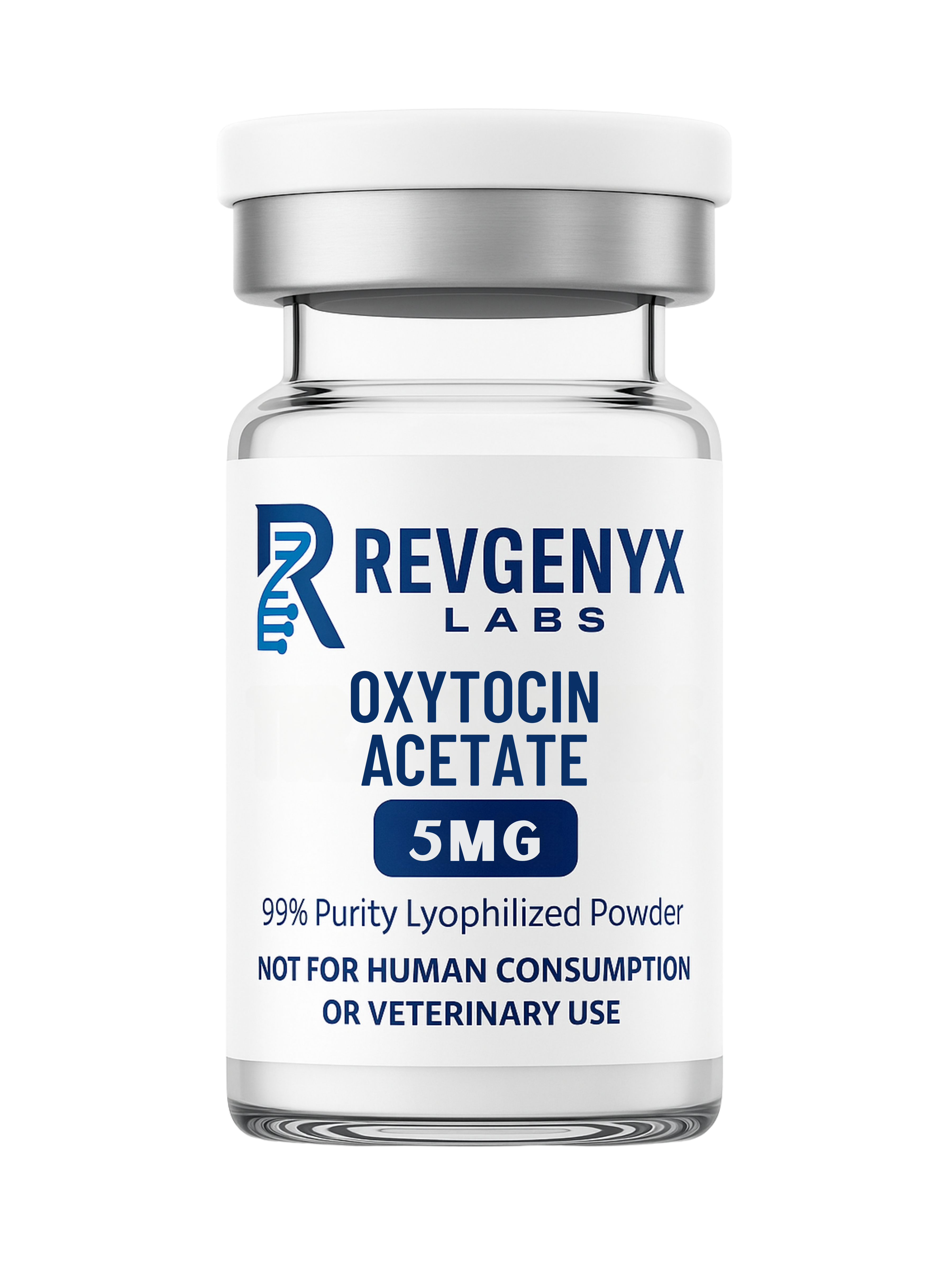
Oxytocin Acetate – 5mg

Key Product Highlights

Fast Dispatch

Orders processed and shipped within 24 hours.

Cited in Scientific Literature

Frequently referenced in peer-reviewed human studies.

Independent Quality Verification

Third-party COA (Certificate of Analysis) available.

Trusted Laboratory Sourcing

Manufactured by established, reputable peptide labs.

Expert Oversight

Reviewed by scientific advisors for accuracy in labeling and documentation.

Oxytocin Acetate is a research peptide of great interest due to its role in mood regulation, social bonding, and wellness pathways. It is frequently studied in neuroscience and behavioral sciences for its potential impact on stress, trust, and emotional regulation.

Beyond neurological studies, Oxytocin Acetate has also attracted attention for its overlap in wellness and dermatology research, particularly in relation to skin health and the “glow” effect linked to systemic well-being.

Store in a cool, dry place at –20°C. After reconstitution, keep refrigerated at 2–8°C and use within a short window.

For research purposes only. Typical studies focus on mood regulation, behavioral pathways, and cellular wellness. Its connection to both neurological and skin biology makes it valuable in multi-disciplinary research.

Frequently Asked Questions

Our local team are here to help

Have more questions about peptide research? You’re not alone. Explore our Frequently Asked Questions for quick answers—or head to the Knowledge Base to explore study areas, calculators, and protocol guides.

What fields of research is Oxytocin Acetate used in?
– Neuroscience, psychology, wellness, and dermatology.

Why is Oxytocin called the “bonding hormone”?
– It plays a role in social interaction and emotional bonding studies.

Is Oxytocin Acetate safe for direct use?
– No, it is strictly for scientific research only.

Can it be cross-listed in multiple research categories?
– Yes, it overlaps in both mood studies and wellness/skin-related research.

How should it be handled in long-term storage?
– Keep frozen and avoid repeated freeze-thaw cycles.